

Do you remember playing cricket after school with friends? Perhaps in the parking area of your society, at the nearby ground or in some small alley where each passing car would mean an interruption in the game. Many of us learned cricket like this. Someone would bring a bat, another would arrange for a tennis ball and suddenly no one wanted to leave home. But what if you want something more than just playing with friends? What if you really want to be a cricketer?
Well, this is when it becomes slightly tricky.
While your parents are planning about a safe career such as being a doctor or IAS officer, you are wondering how to become a cricketer in India and whether or not you have any chances. The good news is that there exists a way out of the problem. You do not necessarily require any academy and connections within the cricket world. However, proper coaching, match practice, patience and understanding of the selection process is needed. So let’s see step by step, the cost required, the hierarchy of cricket along with other important points if you are 17, 20 or 26.
Reality Check: Five Myths About Becoming a Cricketer
| ❌ What People Think | ✅ What’s Actually True |
|---|---|
| You need an expensive academy to get noticed. | Selection runs through your district and state association, not an academy. Academies help with coaching and match time. They aren’t the gate. |
| Playing for India is the only way to earn from cricket. | Domestic cricket pays per match day, and coaching, umpiring, scoring and analysis are real careers too. |
| Big scores in tennis-ball tournaments get you selected. | Selectors look at leather-ball records in recognised age-group and league cricket. Tennis-ball fame doesn’t travel. |
| If you haven’t made it by 19, it’s over. | Age-group cricket has hard age caps, so starting early matters. But senior domestic cricket has no age cap, and coaching and umpiring go on for decades. |
| You can apply to BCCI directly to get picked. | There is no direct application. You rise through district and state teams while selectors watch. |
Also Read: How to Become a Freelancer
How to Become a Cricketer Step by Step
Here’s the whole ladder in seven steps. Screenshot it and show it to whoever says you’re wasting your time.
| 🗺 VISUAL STEP MAP – Gully to Team India | |
| Step 1 | Fall in love with the game early Play every day you can: gully, school, society ground. A tennis ball is fine to start. The habit matters more than the kit. |
| Step 2 | Move to a leather ball and a real coach Get into proper nets and leather-ball cricket as soon as it’s safe. A good local coach who watches you bat beats a famous academy that doesn’t. |
| Step 3 | Play every match you can find School, club and local tournaments build the match record selectors look at. Net practice alone won’t get you noticed. |
| Step 4 | Register with your district association Your district association runs the trials and leagues that feed the state team. Get registered and keep your age documents clean. |
| Step 5 | Make your state age-group team Trials for the under-16 and under-19 state sides lead to national age-group tournaments, where selectors across the country watch. |
| Step 6 | Break into senior state cricket Strong seasons open the door to senior state selection for the Ranji Trophy, Vijay Hazare Trophy and Syed Mushtaq Ali Trophy. |
| Step 7 | Get noticed for India Consistent runs or wickets, India A call-ups and IPL or WPL exposure put you in front of the national selectors. |
| ⏱ Realistic timeline: expect many years of steady performances, not months. Anyone promising guaranteed selection for a fee is selling you hope, not a career. | |
How to Become a Cricketer in India
Indian cricket is a ladder with clear rungs. At the base sit district associations. They pick teams for local leagues and age-group tournaments. District players feed the state association, and the state association picks your state sides. BCCI sits on top, and its selectors watch how you perform at every level below.
The age-group tournaments are where most players get their first national exposure. The Vijay Merchant Trophy covers under-16 players. The Cooch Behar Trophy covers under-19. Doing well in these is how scouts, state selectors and IPL franchises start learning your name.
One thing catches families out: age verification. Under-16 is the formal entry point for BCCI’s junior tournaments, and players go through age checks, including a bone-maturity test. Keep your birth documents clean from day one. Fudging your age ends careers.
Girls follow the same ladder through state women’s teams. Domestic women’s pay jumped in December 2025, and the WPL has made scouting sharper. And if a franchise jersey is your dream, remember the IPL scouts the same domestic circuit. The ladder matters even if the glamour doesn’t start there.
Parents will ask about Plan B, and honestly, they’re right. Careers are short and injuries happen. Finish your degree. A steady backup like becoming a government teacher takes the pressure off every single match. And if you like the uniform, the police services are their own route. See how to become an IPS officer.
Pick Your Role: Batter, Bowler, Keeper or All-Rounder
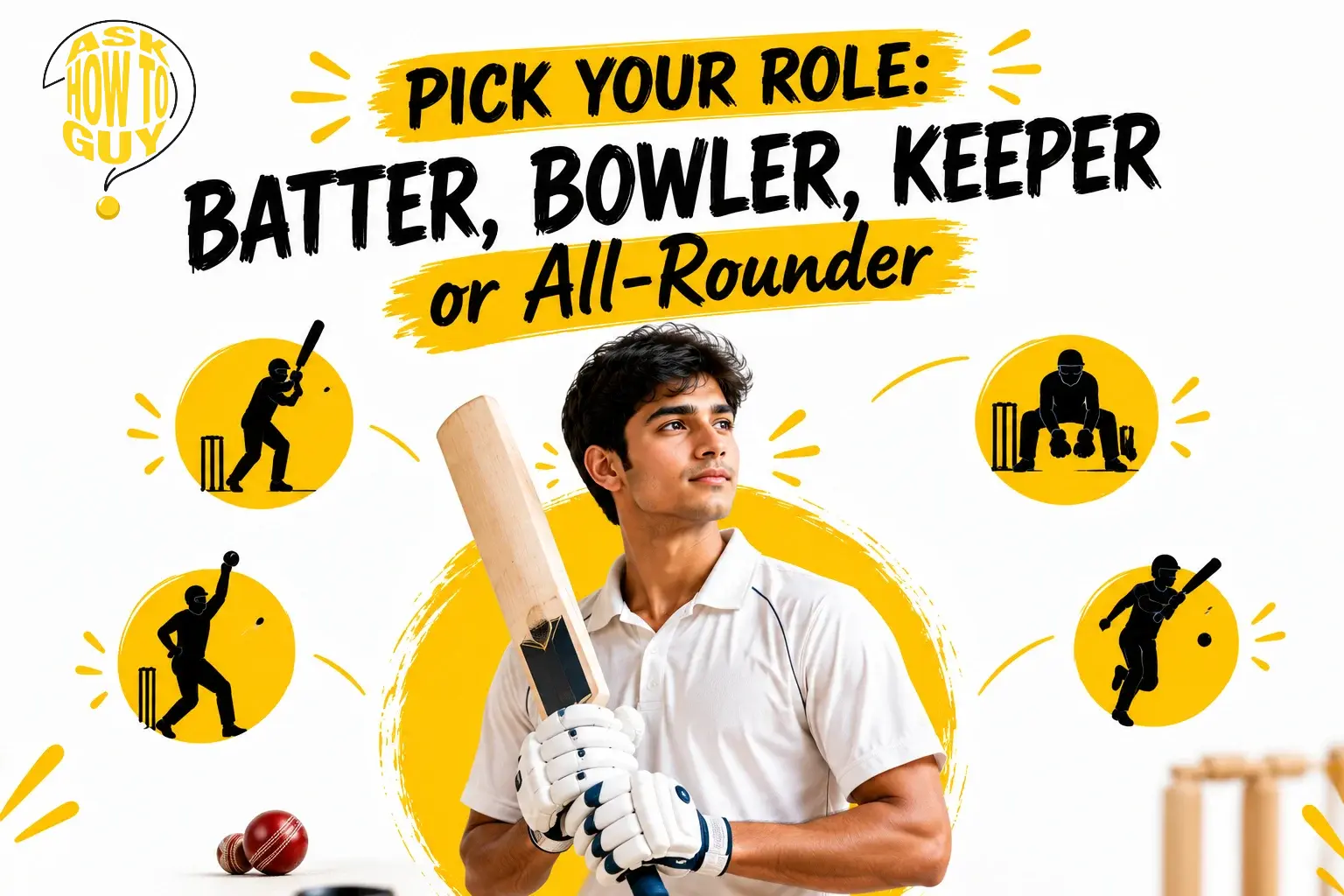
You don’t need to lock this in at ten. But by 14 or 15, selectors want to see what you’re best at. Two roles get searched the most, so here’s the honest short version.
How to Become a Batsman
Technique first, shots later. Learn to leave the ball outside off, play straight, and bat long. Nets with a leather ball teach you more than a hundred tennis-ball sixes. Big scores in long-format age-group cricket are what selectors remember, so train to bat time, not just score fast.
How to Become a Fast Bowler
Line and length before speed. Pace is a gift, but control gets you picked. Get your action checked by a proper coach early, and build your workload slowly. Young pacers who bowl too much too soon pick up injuries that end careers. Strength and fitness work matters as much as bowling spells.
How to Become an All-Rounder
Everything in the two sections above applies to you, just with less time to practise each skill. That’s why you need to pick a lead discipline first. Selectors rarely choose a “bits and pieces” player. They choose someone who would make the XI on one skill alone and adds real value with the other.
Decide early whether you’re a batting all-rounder (a top-six batter who bowls useful overs) or a bowling all-rounder (a front-line bowler who can bat in the lower order), and put most of your training into that one. Build the second skill alongside it, using the same basics: bat time and play straight, bowl a tight line and length.
Workload matters even more for you, because you spend more time on the field than a specialist. Follow the same advice as young pacers: build up slowly, keep spells short while you’re still growing, and don’t skip strength and recovery work. Finally, work on your fielding. A sharp, athletic fielder who bats and bowls is exactly what teams want.
Also Read: How to Become Customs Officer
Cricket Academy Near Me
Searching cricket academy near me on Google Maps gives you ten options and no way to judge them. Use this checklist instead. Does the coach hold a recognised coaching certificate? Are there turf or good matting pitches, not just a net behind a mall? How many practice matches do students actually play each month? Can you name students who made district or state sides?
Ask your district association which clubs and academies are affiliated or regularly send players to trials. Visit for a trial session before paying anything. And be wary of any place that talks more about direct selection than about your batting or bowling.
How to Become a Cricketer Without Academy
Plenty of players get there without ever joining a branded academy. What you can’t skip is what an academy usually gives you. That means a coach who watches you, regular leather-ball matches, and a registered place in the association system.
- Find a local coach: even one session a week with someone who knows the game beats solo net practice.
- Join a club or school team: this gets you real matches, which selectors care about most.
- Register with your district association: no registration means no trials, no matter how good you are.
- Keep a record: scores, wickets and match videos help when you walk into a trial.
An academy is a shortcut to coaching and match time, not to selection. Selectors pick players from association cricket. A certificate from an academy doesn’t change that.
How Much Money Needed to Become a Cricketer
The honest answer is a huge range. You can start for almost nothing, or burn through lakhs. Here’s what the money usually goes on.
- Kit: a basic bat and kit for club or district level costs around ₹20,000, and a high-quality bat can reach ₹50,000.
- Local academy fees: these vary by city. Small setups charge a few hundred rupees a month, and better ones charge a few thousand, plus admission and kit.
- Elite residential academies: at the top end, one prominent academy reportedly costs nearly ₹6 lakh up front, plus about ₹70,000 a month for training and stay.
- Travel and food: trials, tournaments and a proper diet add up fast, especially once you play outside your city.
That top end is not the norm, and you don’t need it to be noticed. A ThePrint excerpt on what cricket really costs Indian families makes the same point. Spend on a good coach and match practice first. Skip the flashy bat until you’ve outgrown the cheap one.
How to Join Indian Cricket Team
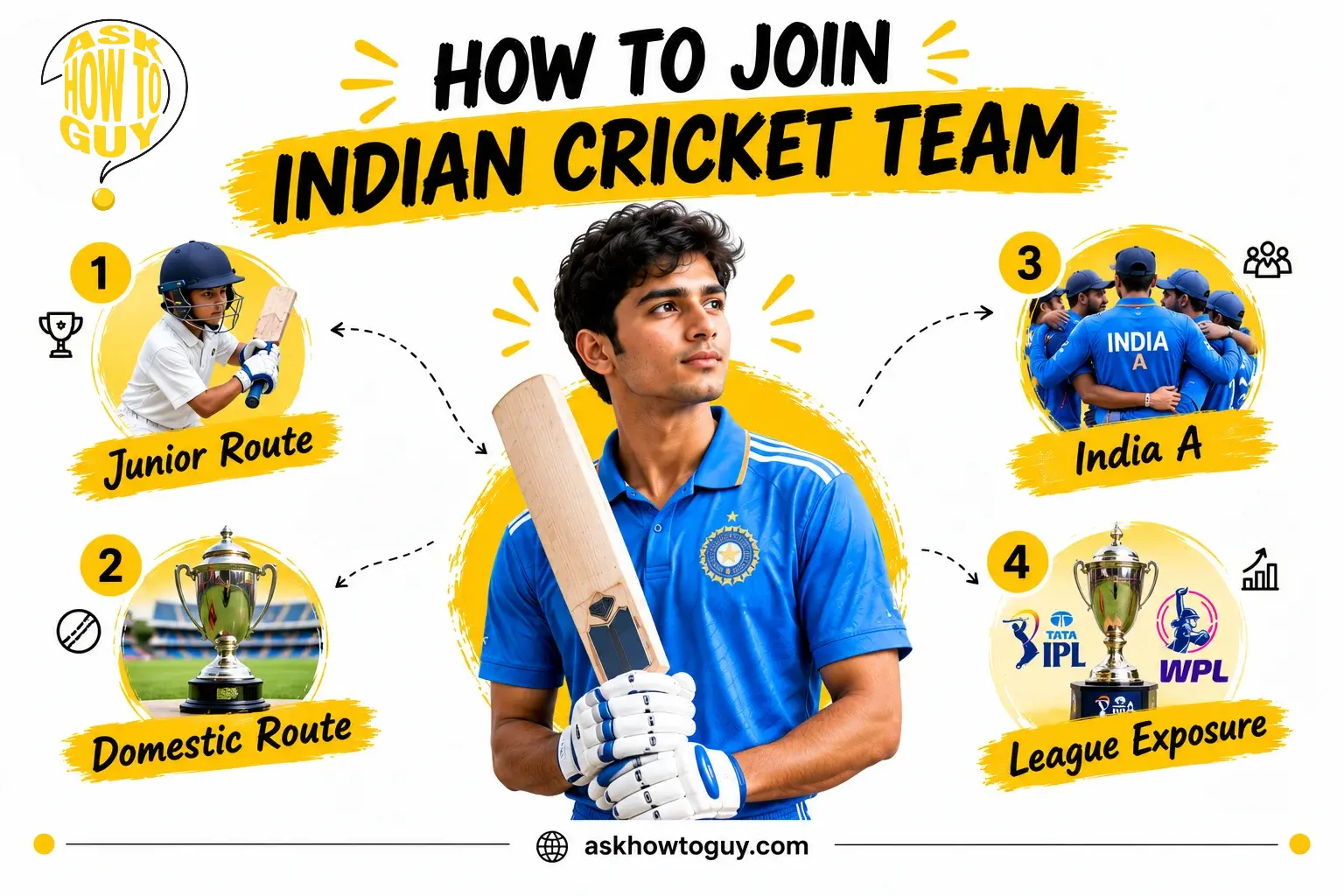
There’s no form to fill and no door to knock on. You’re picked, and selectors pick from performance. Here’s how that works in practice.
- Junior route: strong runs or wickets in state age-group tournaments can lead to India under-19 selection.
- Domestic route: big seasons in the Ranji Trophy, Vijay Hazare Trophy and Syed Mushtaq Ali Trophy are what move names up the list.
- India A: these tours act as a trial run for the senior side, so selectors can compare you against current players.
- League exposure: IPL and WPL performances help, but they work best when your domestic numbers already back them up.
Selectors tend to reward steady form across seasons over one lucky knock. Pick the format you’re strongest in, get consistent there, and let the rest follow.
| 💬 The Guy’s Take Here’s the part the reels skip. For every kid who makes the state team, plenty of equally talented kids don’t. Usually it’s one bad trial, one injury or one rough season. That’s not a reason to quit. It’s a reason to build a life where cricket is the main plan but not the only one. Finish your degree. Keep one backup you could live with. And don’t hand an academy your family’s savings because someone promised you direct selection. Selection happens on the field, in front of your association’s selectors, not in a brochure. If you’d still play on a Tuesday morning with nobody watching, that’s the real sign. Go find a leather ball and a good coach. |
Frequently Asked Questions
1. How Can I Start My Career in Cricket?
Play regularly, find a good local coach, move to leather-ball cricket, and register with your district association. The step map above has the full ladder.
2. How Much Is a Cricketer’s Salary?
It depends entirely on the level. At the top, India’s senior men’s central contracts for 2025-26 pay ₹5 crore, ₹3 crore or ₹1 crore a year by grade. Match fees come on top: match fees of ₹15 lakh for a Test, ₹6 lakh for an ODI and ₹3 lakh for a T20I per match.
Most professionals aren’t at that level. In domestic cricket, BCCI match fees run from ₹40,000 to ₹60,000 a day for senior men, depending on experience. Senior women in the playing XI now earn ₹50,000 a day. Younger players earn much less in their early seasons.
3. Is It Possible to Become a Cricketer?
Yes, but the ladder is narrow, so go in with open eyes. Thousands of players make a living from domestic cricket across India, but far more try than make it. Treat cricket as your main plan, not your only one.
4. Can a 17 Year Old Become a Cricketer?
Yes. At 17 you’re still inside the under-19 age band, so you can go through state age-group selection if you’re registered, age-verified and playing regular leather-ball matches. Eligibility cut-offs change by season, so check your association’s dates. Don’t wait. That window closes fast.
5. Who Is the No. 1 Richest Cricketer?
Sachin Tendulkar, according to most 2026 net-worth estimates, at roughly $170 million (about ₹1,400 crore). MS Dhoni and Virat Kohli follow close behind. These are unofficial estimates, and much of that wealth comes from brands and investments, not match fees.
6. Is 26 Too Late to Start Cricket?
If you mean starting from scratch and aiming for Team India, then yes, that’s not a realistic plan. Age-group cricket ends at 19, and senior selectors back players who’ve been in the system for years. But 26 is far from too late to play club and league cricket, coach, umpire, score, or work in analysis. Those careers are real.
How Can I Join BCCI?
As a player, you don’t join BCCI. You rise through your district and state teams. If you want to work in the game as an official, the route is different. For umpiring, you register with your state association, which forwards your name for BCCI’s exams.
Found this useful? Send it to whoever in your friend group is the next Kohli of your gully but hasn’t registered anywhere yet. Got a specific question about trials, academy fees, or whether it’s too late to start? Drop it in the mail: hello@askhowtoguy.com!